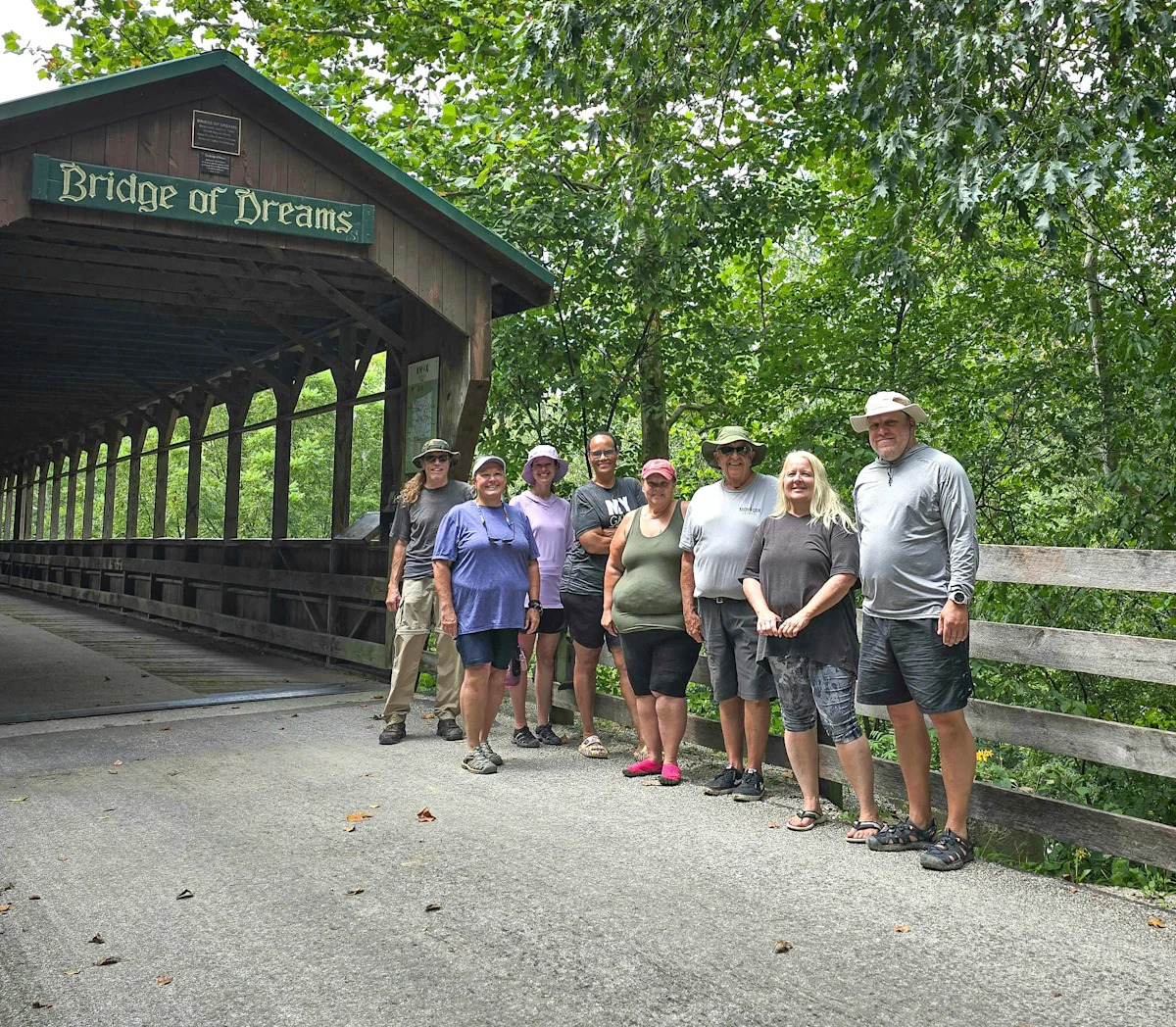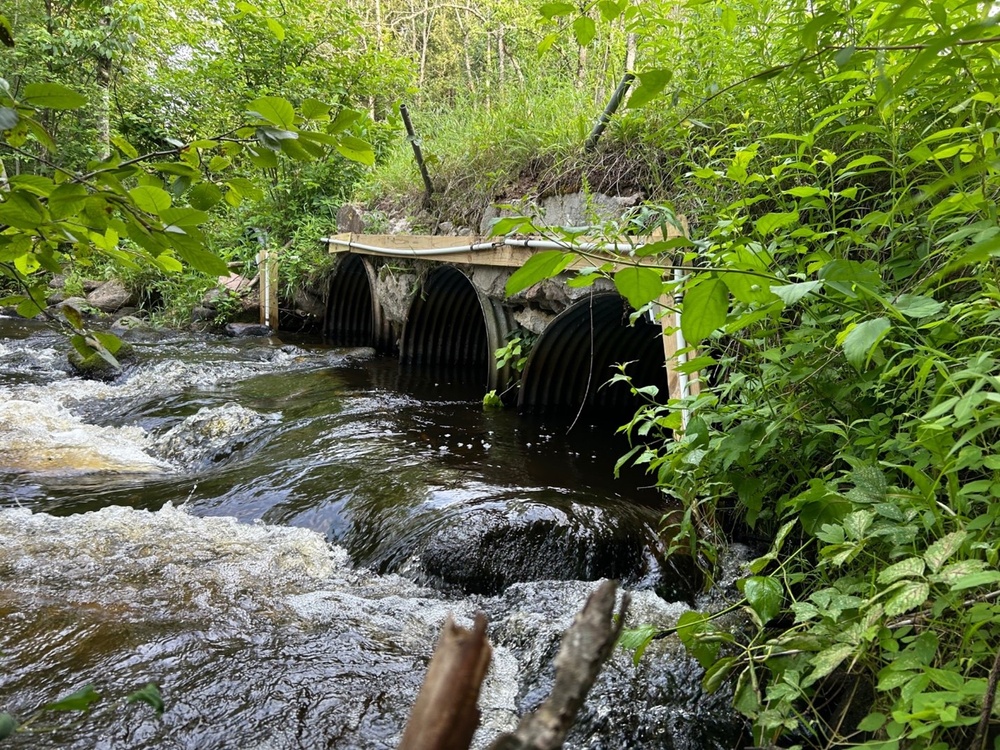
Fish Biologist Alex Catalano and Biologist Andrew Miller, with the U.S. Army Corps of Engineers (USACE) Chicago District, recently joined forces with the Stockbridge-Munsee Community (SMC) Ecology Department to evaluate the impact of road culverts on Aquatic Organism Passage (AOP) in the West Branch of the Red River near Bowler, Wisconsin. The collaborative effort, combining local ecological knowledge and federal technical expertise, aims to determine whether two culverts are restricting fish movement — and if so, prioritize solutions that improve connectivity across the watershed.
Culverts can unintentionally block fish from accessing upstream habitats needed for feeding, spawning, and seeking refuge from heat and predators. These barriers can severely affect fish populations and reduce the overall health and resilience of aquatic ecosystems.
To monitor fish passage, the team employed electrofishing to safely capture Brook Trout and White Suckers, both selected due to their ability to make large migrations.
“Brook Trout are also a culturally and recreationally important species to the SMC and local community,” Catalano says.
The fish were then implanted with Passive Integrated Transponder (PIT) tags—small microchips similar to those used to identify pets—which allow researchers to track their movement through the stream system.
Antennas were installed upstream and downstream of the culverts to detect PIT-tagged fish as they pass through. In addition to internal PIT tags, fish were also externally tagged to make them identifiable to anglers.
Data collected from this study will help identify which culverts in the West Branch Red River Watershed are most in need of replacement or redesign. The ultimate goal is to reconnect fragmented habitat to sustain fish populations faced with increasing threats.
Although this is USACE, Chicago District’s first study in the area, similar studies are being conducted involving culvert removals by other state and federal agencies.
“AOP barriers at road…