Page not found – Wilkes-Barre Citizens’ Voice Skip to content
Continue reading
Donald Trump is back in the White House, and the Republican Party is firmly his. The old-guard GOP—the party of Bush, McCain, and Romney—is dead and buried, replaced by an America First movement that is stronger than ever.
But not everyone got the memo.
A few holdouts from the old establishment—Senators Lisa Murkowski, Susan Collins, and the fading Mitch McConnell—are still clinging to their power, trying to stand in the way of Trump’s agenda. They are the Last of the Republican Mohicans, relics of a party that no longer exists, desperately fighting to maintain relevance in a GOP that has moved on without them.
Their resistance is not a sign of strength. It’s the last gasp of a dying political class, one that has run out of time, power, and options.
McConnell’s Final Act
For decades, Mitch McConnell was the ultimate Washington insider, the Senate’s master of maneuvering. He blocked Obama’s Supreme Court nominee, pushed through conservative judges, and kept the Republican caucus in line. Love him or hate him, he knew how to wield power.
Not anymore.
McConnell is a shadow of his former self. His grip on Senate Republicans has weakened, his ability to stall legislation is no longer absolute, and his declining health has left him visibly struggling to keep up. At 82, this is likely his last term, and with nothing left to lose, he is playing the only card he has left: obstructing Trump’s second-term agenda, not because he thinks he can win, but because it’s all he has left.
But here’s the problem for McConnell—he doesn’t run the party anymore. The days of Republican senators bowing to his authority are over. The House GOP has fully embraced America First, electing their Speaker on the first ballot without the backroom chaos of past leadership fights….
Text within this block will maintain its original spacing when publishedit is better to dream than to face the darkness.
D.A. Lockhart’s seventh poetry collection, North of Middle Island, is a work that I struggle to share adequately.
Divided into two parts, the first half consists of poems in which Lockhart examines and reports on a “land that has been forgetful of its Indigenous past”: Pelée Island (resting north of Middle Island in Lake Erie), and the forces (both natural and colonial) that shape life there. Something is unsettling about the poems; at times, his descriptions would leave me feeling that I was in a remote space. He uses white space and words with equal skill, creating the feeling of quiet remoteness that one can have while in nature “alone” (despite being surrounded by teeming hidden life).
Other times, the world of the island is sumptuously painted: A sunrise is described as being “awash in a deepening bruise of our long waking slide towards morning and beyond”; the skittering of terns are “talons raking sand like a breath”; or, the rabbits (chëmàmsàk) kick up dust “as they dance from ditch to ditch” (the latter a particular example of the poet’s use of white space to simulate the darting of small creatures across the road).
Primarily in English, Lockhart weaves the Lenape language (of the Unami dialect) throughout the collection, providing spiritual links across time and space. (He shares a reference guide defining the words used; I wish I could hear how they are pronounced for the full lyrical effect I fear that I’m missing.)
Text within this block will maintain its original spacing when publishedthe match to set the world sufficiently right.
The second part of the collection is a shift in tone (with a…
The Day’s Digital Archive
142 years of history at your fingertips. Search for FREE here.
{ event.preventDefault(); // Prevent any default action const baseUrl = ‘https://theday.com/live-content/report-comment-form/’; const queryParams = new URLSearchParams({ comment: commentBody, commenter: commenterName }).toString(); window.location.href = `${baseUrl}?${queryParams}`; }); reportSpan.addEventListener(‘click’, (event) => { event.preventDefault(); // Prevent any default action const baseUrl = ‘https://theday.com/live-content/report-comment-form/’; const queryParams = new URLSearchParams({ comment: commentBody, commenter: commenterName }).toString(); window.location.href = `${baseUrl}?${queryParams}`; }); } } // Function to process existing and dynamically added comments function processComment(comment) { const flagElement = comment.querySelector(‘.inlineFlagContainer .fas.fa-flag-alt’); if (flagElement) { updateFlagBehavior(flagElement, comment);…
Here’s an oddity: No doubt you’ve noticed that some of our states bear Native American names. But have you ever counted how many? Illinoisans, of course, know we’re surrounded by such states: Iowa, Wisconsin, Michigan, Indiana, and, of course, our own Illinois (a Frenchification of a Native American tribe, the Illini).
We’re so used to it, we take it for granted. But keep going: Minnesota, Missouri, Ohio, Kentucky, North Dakota, South Dakota, Tennessee, Alabama, Mississippi, Arkansas, Kansas, Oklahoma, Texas, Arizona, Connecticut, Massachusetts, Hawaii, Alaska, Idaho, Nebraska, New Mexico, Utah, and Wyoming.
Twenty-eight out of 50. More than half! Add the six states with Spanish names, California, Colorado, Florida, Montana, Nevada, and Oregon (a little less definitively), and the tally is 34. For good measure, throw in the French-derived states, Louisiana, Maine (also less definitive), and Vermont, plus one from the Dutch, Rhode Island (anglicized from Roode Eylandt, referring to the red clay near the shore, which resolves the mystery of why a state that isn’t an island should be named “Island”).
That brings the total to 38 out of 50 states bearing non-Anglo names (the remaining 12 are Washington, Virginia, West Virginia (Kanawha, the lovely name of a principal river, regrettably, didn’t make the cut), North Carolina, South Carolina, Maryland, New Hampshire, New Jersey, Georgia, New York (changed from New Netherland when the English took over), Pennsylvania (William Penn wanted it named just “Sylvania” for the forests), and Delaware (which sounds Native American, and there is a Delaware tribe, but the state was named after Lord De La Warr, the first governor of Virginia, go figure).
One would expect, in a country culturally “descended” from the British, that the majority of states would bear Anglo names. No, they are but a small minority. And one would definitely not expect —…
The Nanticoke Conservation Club hosted their 28th annual ice fishing derby Saturday morning.
The return of the event after two years of cancellations, cold weather allowed for the ice to freeze eight to nine inches thick, creating perfect fishing conditions.
“Ice fishing is not for everybody but when you fall in love with ice fishing, it may become your favorite place to be,” said Philip Dale, a member of the Nanticoke Conservation Club.
The derby at Francis Slocum State Park invited fishermen of all skill levels to brave the cold and reel in the biggest catch.
“We sometimes used smaller poles as you can see, so you can sit alongside holes drilled through the ice. You have a short pole so you can get up close to it. This is jigging, using a small jigging pole and you can bob that up and down a bit and hopefully it will attract a fish to come over and grab your bait,” explained Dale.
Using sleds to bring equipment on the lake, holes are dug throughout the ice with special tools to find the perfect spot.
“Drilling holes all over the ice and going from spot to spot until you find where those fish are. Typically, they’ll be around different structures like a stump or a rock,” said Dale.
Different species of fish can be found in different lakes, but for the derby, six were being targeted.
“Bass, pickerel, perch, crappie, trout, bluegill and we have a youth prize for the biggest fish overall that they catch,” said Gary Gronkowski, president of the Nanticoke Conservation Club.
Metal crampon spikes attached to shoes allowed those on the ice to enjoy a safe day on the lake.
“It does not affect how structurally sound it is for people to be out there. It can be frightening. You can be…
Tuesday, Feb. 4
Colonial Valley Conference Tournament, First Round
13-West Windsor-Plainsboro North (6-12) at 4-Ewing (9-10), 4pm
11-Trenton (9-12) at 6-Allentown (11-9), 4pm
Nottingham (3-17) at Princeton (13-6), 4:30pm
12-West Windsor-Plainsboro South (8-10) at 5-Robbinsville (9-9), 5pm
14-Lawrence (4-13) at 3-Notre Dame (11-6), 5pm
10-Hamilton West (9-12) at 7-Steinert (8-10), 5pm
9-Hopewell Valley (9-11) at 8-Princeton Day (10-6), 6pm
Hunterdon/Warren/Sussex Tournament, Second Round
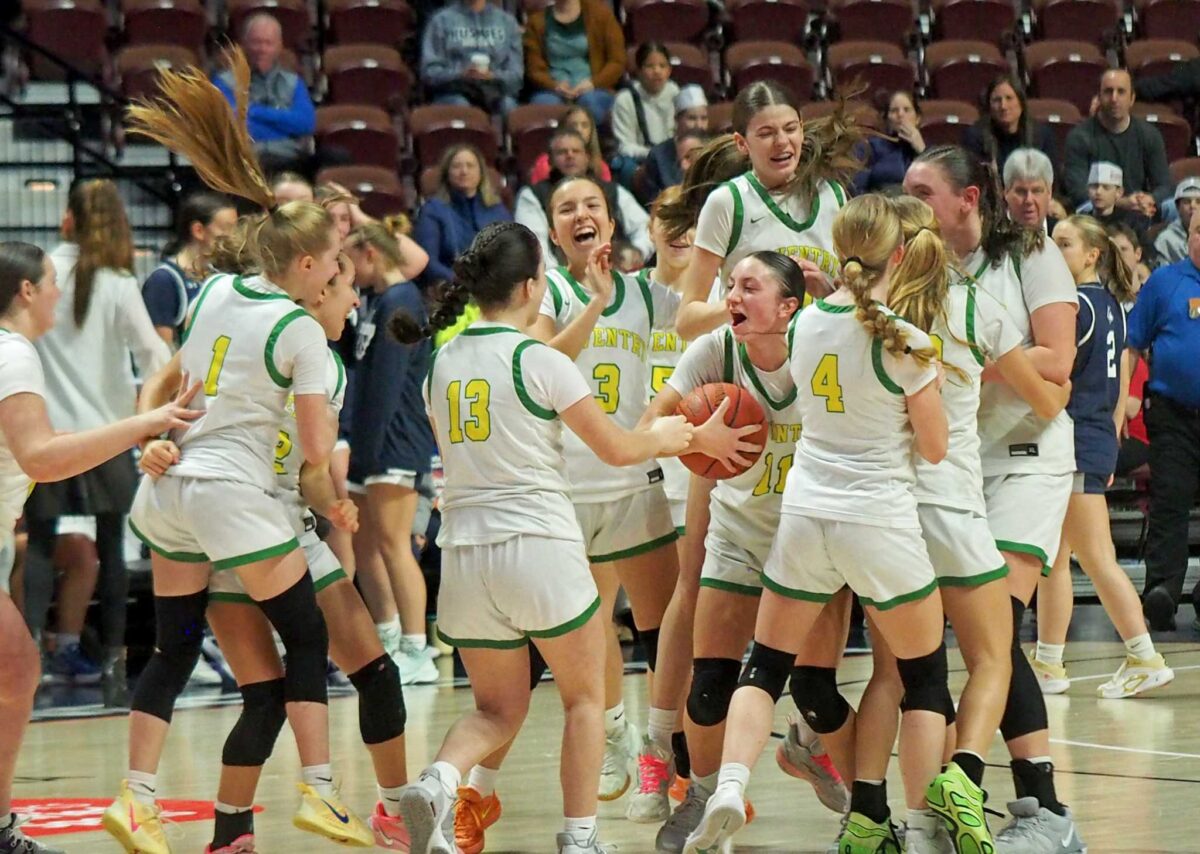
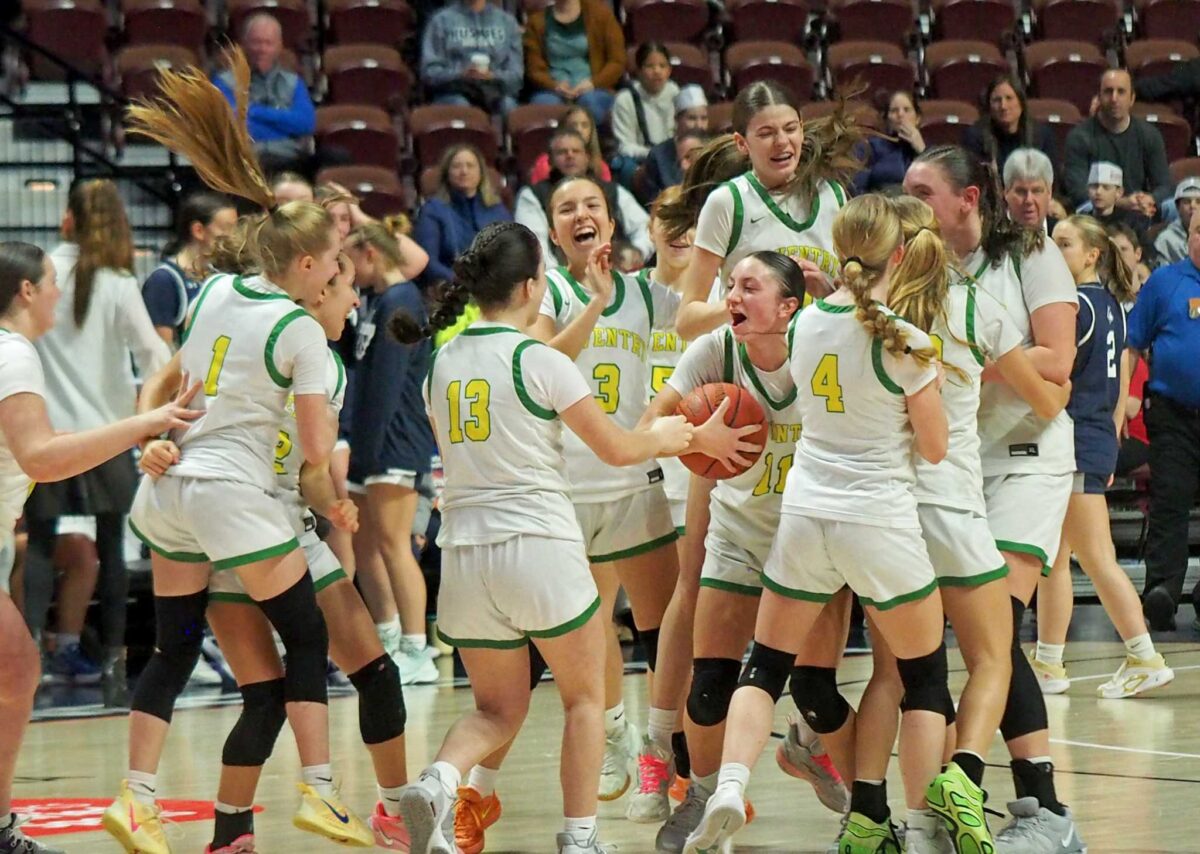
13-Lenape Valley (7-9) at 4-Hunterdon Central (7-11), 4pm
10-High Point (12-8) at 7-Belvidere (12-5), 5pm
14-Phillipsburg (3-15) at 3-Sparta (12-6), 6pm
12-Vernon (8-8) at 5-Delaware Valley (12-6), 7pm
Regular Season
BIG NORTH
Passaic Valley (8-10) at DePaul (10-5), 4pm
Paramus (5-10) at West Milford (12-3), 4:15pm
Northern Highlands (7-10) vs. Wayne Valley (4-12) at Wayne Valley High School, 4:15pm
Mahwah (11-7) at Pascack Hills (6-10), 4:15pm
Tenafly (5-9) at Old Tappan (11-5), 4:15pm
Teaneck (12-5) at Pascack Valley (11-7), 4:15pm
Dwight-Morrow (2-15) at St. Mary (Ruth.) (5-12), 4:15pm
Fort Lee (3-13) at Dumont (8-11), 4:15pm
Passaic (4-11) at Passaic Tech (9-7), 4:30pm
Paterson Eastside (8-7) at Clifton (3-16), 4:30pm
Bergen Tech (7-8) at Paterson Kennedy (13-5), 6pm
Indian Hills (5-13) at Westwood (9-7), 7pm
River Dell (11-4) at Ramsey (10-6), 7pm
Wayne Hills (3-13) at Ramapo (15-4), 7pm
Paramus Catholic (8-10) at Ridgewood (10-5), 7pm
Cliffside Park (6-10) at Ridgefield Park (12-6), 7pm
Bergenfield (4-11) at Demarest (15-2), 7pm
Holy Angels (4-12) at Immaculate Heart (12-6), 7pm
Fair Lawn (7-11) at Hackensack (8-11), 7pm
COLONIAL
Gateway (7-11) at Sterling (10-9), 5:30pm
Audubon (15-2) at Haddon Heights (14-6), 5:30pm
GMC
Kinnelon (9-9) at New Brunswick (10-9), 5pm
North Plainfield (5-13) at St. Thomas Aquinas (16-5), 5:30pm
Dayton (7-9) at J.P. Stevens (8-11), 5:30pm
Montgomery (6-12) at Woodbridge (3-15), 5:30pm
Old Bridge (9-9) at South Brunswick (9-9), 5:30pm
Monroe (12-7) at Piscataway (8-8), 5:30pm
Sayreville (8-13) at Perth Amboy…
This page contains references to offers from one or more of our partners. We may receive compensation when you click on those links and redeem an offer. Terms and conditions apply to the offers listed on this page.
McLuck is one of the most popular Sweepstakes Casinos amongst players, with more than 1,000 slots from the world’s leading game providers available.
From classic Vegas-style titles to hold and win, megaways and jackpot play games, there is something for every player at McLuck.
With both Gold Coins and Sweeps Coins currency in operation, you can play for pure entertainment or try to win real prizes.
No matter your motivation, let’s take a closer look at the top slots to focus your attention on.
McLuck Casino Bonus: Claim Up To 27.5 Free SC Coins & 57,500 GC
One of the best way to start spinning the reels on your soon-to-be favorite slots is to do so with some free bonus coins.
When you sign-up to McLuck Casino, you can claim up to 27.5 Free Sweeps Coins and 57,500 Gold Coins.
Sounds like a pretty good way to secure some free spins.
New players who create an account at McLuck will get 7,500 GC and 2.5 SC instantly.
On top of that, you can avail of the exclusive first purchase bonus offer of 50,000 GC and 25 Free SC for only $9.99.
Just for good measure, you can earn a further 2,000 GC and 0.25 SC for each that day that you log in.
Ready to use your generous welcome bonus to play some slots?
Best McLuck Sweepstakes Slots To Try
With such a massive selection of games to choose from, it can be a challenge to decide which slots to turn your…
Ben Rothwell proudly wore the BKFC World Heavyweight Championship belt over his shoulder at the KnuckleMania V post-fight press conference.
The belt is heavy, but Rothwell felt a massive burden lifted off his shoulders.
Less than an hour earlier, the combat sports legend accomplished his lifelong dream of winning a world championship. Defying the oddsmakers and many of his peers on the BKFC roster, Rothwell dethroned Mick Terrill with a 36-second KO in front of more than 17,000 screaming fans at the sold-out Wells Fargo Center in Philadelphia.
“It’s kind of tough to put it all into words; it still feels very surreal,” says Rothwell, who’s rarely been short on words during his storied combat sports run.
Rothwell enjoyed a long, successful career in MMA. He’s defeated his share of world champions, but a UFC belt eluded him during his 17 fights with the promotion.
“So many people have believed in me for so long and have wanted to see me get a world title, and I finally did it. At 43 years old, man, I thought I let the opportunity slip by me,” Rothwell says.
“I had kind of accepted the fact that I wouldn’t be a world champion,” he adds. “I went through the depression, through all the stages of grief, but here it is. It’s happened. It’s real, but it’s pretty surreal.”
Rothwell is happier now than he was before Saturday’s Co-Main Event showdown with Terrill, but he’s definitely not satisfied. He hopes for a quick turnaround — ideally in his home state of Wisconsin, where bare knuckle fighting is in the process of being legalized.
“I’m ready for anything,” he says. “I want to be a busy champion and leave my mark as a champion in the sport of bare knuckle fighting.”
Luzerne County’s outside engineer recently briefed the council on bridges as part of a broader plan to catalog and prioritize work on all 300-plus county-owned spans.
Tom Reilly, president of Reilly Associates in Pittston — the county’s outside engineer — told council during last week’s work session the first phase now completed was categorizing them by length.
Only four crossings exceed 100 feet. These bridges and status updates he provided:
• Nanticoke/West Nanticoke Bridge over the Susquehanna River (2,072 feet)
The county is in the process of selecting an engineer who must come up with three options to address the bridge, which was reduced to a 5-ton weight limit prohibiting access by fire trucks and emergency rescue vehicles.
In addition to $10 million in federal funding allocated through the state for this project, the county has access to a $55 million casino gambling fund established for county infrastructure.
Until a solution is selected and designed, the span must be inspected every six months, Reilly said.
• Water Street (Firefighters’ Memorial Bridge) linking Pittston and West Pittston (1,500 feet)
The Pennsylvania Department of Transportation had agreed to assume responsibility for replacing the closed Water Street Bridge because it is part of a bridge bundling that also will replace the nearby state-owned Spc. Dale J. Kridlo Bridge (Fort Jenkins) Bridge.
Reilly said the Water Street project is expected to be bid out in late 2026, so work can commence at the end of that year. This is a hard deadline due to $18 million in federal grant funding earmarked for the project, he said.
• Stephenson Street Bridge, Duryea (268 feet)
This bridge is gated to block public usage because it had been primarily intended to access a private quarry and swampland on the north side of the Lackawanna…