Wisconsin women have been making history as community builders, industry innovators, government leaders and more for centuries. Learn about some of the notable women in Wisconsin history during Women’s History Month with the PBS Wisconsin Education Wisconsin Biographies collection.
Milly Zantow
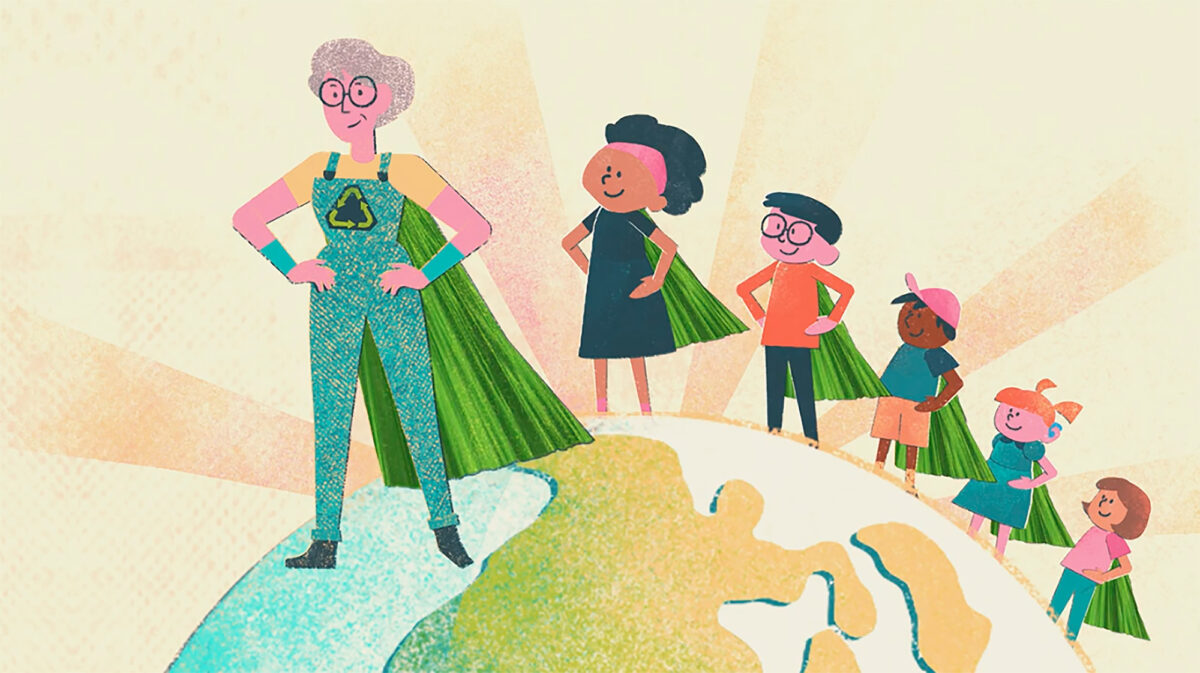
Milly Zantow changed recycling in Wisconsin and the world. When she learned about a problem facing her Sauk County community — a landfill closing much earlier than it should — she took action by focusing on recycling. At that time, no one was recycling plastics, but through her ingenuity, Zantow found a way and developed the idea for the numbering system to identify plastics for recycling.
Electa Quinney
Electa Quinney was Wisconsin’s first-known public school teacher and a notable mentor in the Mohican community. Because of the impactful time in which she lived, Quinney’s story shines a light on the broader story of the Stockbridge-Munsee Mohicans who used non-Native and traditional Native education to preserve their ways of life.
Carrie Frost
Carrie Frost was a fly fishing entrepreneur who paved the way for other female business owners in the late 1800s and early 1900s. Even though women could not vote and in many cases could not own property, Frost created a successful manufacturing company, and she gave more than 150 Stevens Point women a chance to earn their wages at a time when they were not often able to do so.
Elizabeth Baird
Elizabeth Baird was a strong woman with fierce determination living on the Wisconsin frontier. Born a native French speaker, Baird taught herself English and worked as an interpreter in her husband’s law firm, all while operating her family’s farm and recording her…
The mystery surrounding the Lost Colony, Roanoke and Sir Walter Raleigh’s early explorers is one that’s fascinated generations of North Carolinians.
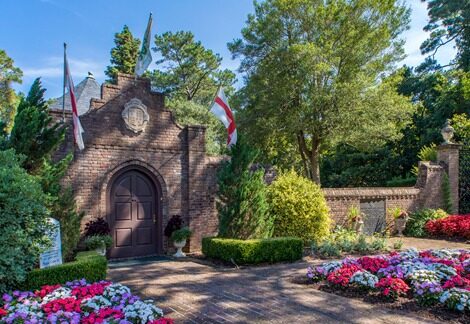
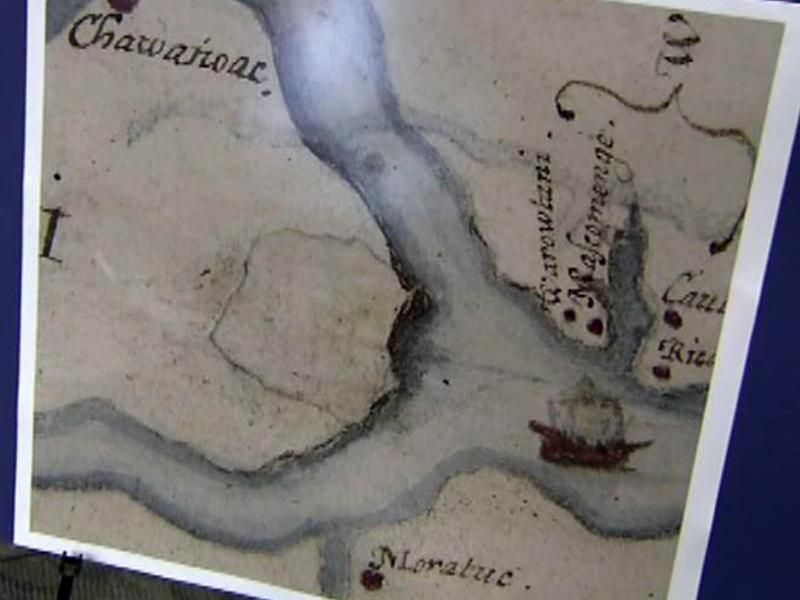
Next week, archaeologists will dig in the Elizabethan Gardens with hopes of finding new evidence of the lost “Algonquian village of Roanoke” — which was home to Sir Walter Raleigh’s explorers in 1584.
Last summer, the First Colony Foundation team uncovered tantalizing clues in the ongoing mystery. They dug up shards of Algonquian pottery dating back to the 1500s, as well as a ring of copper wire they believe could have been an earring that once adorned a warrior from an indigenous tribe.
“Finding domestic pottery – the type used for cooking – in close proximity to an apparent piece of Native American jewelry, strongly confirms that we are digging in the midst of a settlement,” says Eric Klingelhofer, the First Colony Foundation’s Vice President for Research.
And Roanoke is the only known village at that site.
A copper ring could mean a village once stood in the Elizabethan Gardens
Historians say copper had an almost spiritual significance for the indigenous tribes.
“They prized the metal the way the English valued gold and silver. For example, tribal chiefs would honor brave warriors with trinkets made of beaten copper, indicating the value native peoples placed on it,” said a release from the First Colony Foundation.
The ring, in particular, supports the idea they may have found remnants of Roanoke.
This post was contributed by a community member. The views expressed here are the author’s own.
Temple University Professor Adam DePaul, Doctoral Candidate in Cultural and Mythical Studies, will share past and present insights into the significance of the Lenape Nation during this free program. DePaul is focused on raising awareness of Lenape culture and correcting a lot of the misinformation that is often taught about Lenape history.” DePaul has stated, “I have always had a personal passion to tell stories. I thoroughly enjoyed this role because it embraces both my academic life and cultural life.” Pre-registration requested at: friendsofdoylestownlibrary@gmail.com
MANTEO, N.C., Feb. 28, 2024 – Archaeologists with First Colony Foundation will begin a new dig at Roanoke Island’s Elizabethan Gardens next week, looking for more evidence of the Algonquian village of Roanoac that hosted Sir Walter Raleigh’s explorers in 1584. The weeklong dig, starting Monday, March 4, is the first of two excavations the foundation has slated, with another set for Fort Raleigh later in the spring.
The upcoming Elizabethan Gardens dig builds on tantalizing finds uncovered last summer, when the First Colony Foundation team uncovered sherds of Algonquian pottery dating to that time – an interesting find, by itself — but the most intriguing discovery was a ring of copper wire. About the size of a quarter, the loop could have been an earring that once adorned a Native American warrior.
“Finding domestic pottery – the type used for cooking – in close proximity to an apparent piece of Native American jewelry, strongly confirms that we are digging in the midst of a settlement,” says Eric Klingelhofer, the First Colony Foundation’s Vice President for Research. “And Roanoac is the only known village at that site.”
The ring, in particular, supports that view. Made of drawn copper, the wire was almost certainly brought to America by English explorers as part of their trade goods. Local natives did not have the technology to produce such rounded strands. And neither the French nor the Spanish ventured as far north as Roanoke Island to trade.
For Native Americans, copper had an almost spiritual significance. They prized the metal the way the English valued gold and silver. For example, tribal chiefs would honor brave warriors with trinkets…
NANTICOKE — Police in Nanticoke City and the Luzerne County Drug Task Force seized illicit drugs and arrested five people when a search warrant was served at a residence at 244 E. Main St. Saturday.
John Matthew Fox, 26, was charged with three counts of possession with intent to deliver a controlled substance and possession of a firearm with an altered serial number. He was jailed at the county correctional facility for lack of $200,000 bail.
Beth Ann Lewis, 30, was charged with a single count of possession with intent to deliver a controlled substance. She was jailed for lack of $100,000 bail.
Matthew King, 33, of Wilkes-Barre, was charged with possession of a controlled substance and two counts of possession of drug paraphernalia. He was jailed for lack of $2,500 bail.
Jeremy Michael Shea, 32, of Plymouth, was apprehended on an arrest warrant from Nanticoke police related to a burglary offense. He was jailed for lack of $35,000 bail.
Joelene Marie Moon, 36, of Philadelphia, was apprehended on an arrest warrant from Newport Township police. She was jailed for lack of $30,000 bail.
District Judge Joseph Spagnuolo of Plains Township arraigned the five people.
Police and drug agents said the search warrant at the East Main Street residence was based on numerous complaints of suspected drug activity.
Suspected methamphetamine, suspected marijuana, digital scales, packaging materials and a 9mm Ruger handgun with an altered serial number, and two boxes of ammunition were seized during the search of the residence, police said.
Anishinabek Nation Council members joined Day 1 of the Anishinabek Nation Lands and Resources Forum in North Bay, Ont.
By Kelly Anne Smith
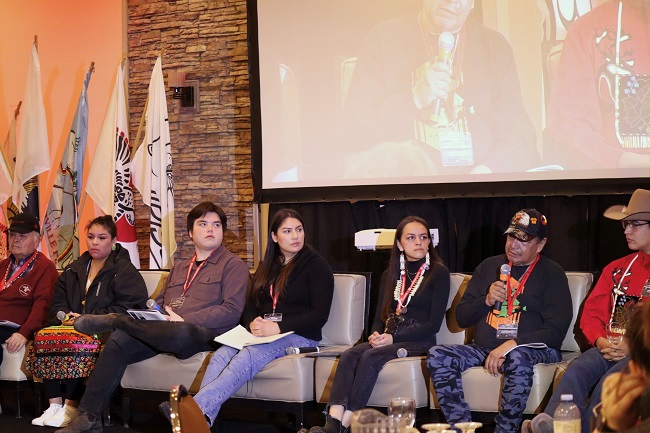
NORTH BAY— During the Anishinabek Nation Councils Panel at the Anishinabek Nation’s 8th Land and Resources Forum, Kina-Gego-Naabadosin – Everything is Connected, in North Bay from February 13-15., Eshki-niigijig Advisory Council member Lance Copegog of Beausoleil First Nation talked of important work being done to protect the Great Lakes.
The panel had members from the Anishinabek Nation Getzidjig Advisory Council including Nmishomis Leroy Dolson of Munsee Delaware Nation and Nmishomis Mike Esquega of Biinjitiwaabik Zaaging Anishinabek. The panel also featured Eshki-niigijig Advisory Council members Brittnee Waindubence of Shequiandah First Nation, Terra Roy of Beausoleil First Nation, Pierre Debassige of M’Chigeeng First Nation, and Katelyn Peters of Munsee Delaware Nation.
Peters shared her perspective as urban Indigenous youth, introducing spirituality on how we view the water.
“When it comes to the people who are watching this, it doesn’t only have to be [Indigenous people], it could also be white people. Because when I was in university in my Indigenous Studies courses, there are a lot of great, amazing white people who really want to help our people and who are going to be running this country in twenty years. They need to understand why do Anishinabe people respect the water? How do they see the water because they might not be exposed to that in any other capacity.”
Copegog spoke of being gathered at the 2024 Anishinabek Nation Lands and Resources Forum because of the commitment to the lands and resources of the Anishinabek Nation’s communities. He spoke of innovative solutions that can be worked on together when facing challenges.
“We’re very committed to carrying forward some of the work we’ve…
 {body.classList.add(“small-font”),body.classList.remove(“medium-font”),body.classList.remove(“large-font”)}),mediumFontButton.addEventListener(“click”,t=>{body.classList.remove(“small-font”),body.classList.add(“medium-font”),body.classList.remove(“large-font”)}),largeFontButton.addEventListener(“click”,t=>{body.classList.remove(“small-font”),body.classList.remove(“medium-font”),body.classList.add(“large-font”)})]]>